

A leaking water pipe behind a wall can be one of the most difficult plumbing problems for a homeowner to identify. Unlike a dripping tap or a leaking toilet, the source of the problem may be completely hidden from view. By the time water becomes visible, the leak may already have been affecting the surrounding wall, flooring or other parts of the property.
Fortunately, there are several warning signs that can help you recognise a hidden water leak before it develops into a much more serious plumbing problem.
Unexplained damp patches, peeling paint, a musty smell, mould, changes in water pressure and unusual sounds from inside a wall can all provide clues that something is wrong behind the surface.
If you suspect a hidden leak in your Sheffield or South Yorkshire home, professional plumbing and leak detection services can help identify the problem and determine what needs to be repaired.

What does a hidden water leak look like?
A hidden water leak does not necessarily look like a traditional plumbing emergency.
You may not see water coming through the ceiling or notice a pipe visibly dripping. Instead, the first signs can be subtle changes around your home.
For example, you might notice that part of a wall feels damp, paint begins to bubble, wallpaper starts coming away from the surface or a previously dry area develops a musty smell.
In some cases, the first indication can be a sudden change in your water bill or water pressure.
Because the pipe itself may be behind plasterboard, brickwork, tiles or another finished surface, finding the source can require professional investigation.
COP Plumbing & Maintenance lists leak detection and pipe repair among its plumbing services, alongside shower, tap, toilet, waste disposal and water heater repairs.
1. Look for unexplained damp patches
One of the clearest warning signs of a hidden leak is an area of dampness that you cannot explain.
Look carefully at walls, ceilings and floors around bathrooms, kitchens, utility rooms and other areas where water pipes are likely to run.
A damp patch may appear darker than the surrounding wall. It may feel cool or damp to the touch, or it may gradually become larger.
However, not every damp patch is caused by a leaking water pipe. Condensation, penetrating damp, rainwater ingress and other building problems can create similar symptoms.
This is why it is important not to assume that every damp mark automatically means there is a burst or leaking pipe behind the wall.
If the area is close to plumbing fixtures or has appeared alongside other plumbing symptoms, however, it is worth investigating.
2. Watch for bubbling or peeling paint
Water trapped behind a wall can affect decorative finishes.
You may notice paint becoming:
- Bubbled or blistered
- Cracked
- Discoloured
- Loose
- Flaky
Wallpaper may also begin to lift or separate from the wall.
These changes can happen because moisture is getting into materials that would normally remain dry.
If you repaint the affected area without dealing with the source of the moisture, the problem is likely to return.
For this reason, it is better to establish why the wall has become damp before carrying out cosmetic repairs.
3. A musty smell could indicate hidden moisture
Your sense of smell can sometimes provide an early warning.
A persistent musty or damp smell in a particular room can indicate that moisture is accumulating somewhere it should not.
This is particularly worth investigating if the smell is strongest near a bathroom, kitchen, utility area or section of wall containing plumbing.
Do not automatically assume that a musty smell means there is a leaking pipe. Poor ventilation and condensation can also cause damp smells.
However, if the smell is accompanied by visible staining, mould, bubbling paint or other plumbing symptoms, a professional inspection may be appropriate.
4. Look for unexplained mould
Mould generally needs moisture to grow, which means unexpected mould can sometimes provide a clue that an area is remaining damp.
Pay particular attention to mould appearing in unusual locations.
For example, if mould repeatedly develops on one particular section of wall despite normal ventilation and cleaning, investigate whether there could be a source of moisture behind it.
Bathrooms naturally produce considerable humidity, so condensation is a common explanation for mould in these rooms. But persistent dampness around pipe routes should not be ignored.
If cleaning the surface temporarily removes the mould but it repeatedly returns in the same location, the underlying moisture source should be investigated.
5. Listen for unusual sounds behind the wall
Sometimes your ears can detect a plumbing problem before your eyes can.
If you hear unexplained sounds such as dripping, hissing, running or trickling water when taps and appliances are not being used, there could be a plumbing issue somewhere in the system.
A sound behind a wall does not automatically prove that there is a leak. Water pipes can naturally make noises as water moves through them, particularly when taps are opened or heating systems operate.
The important factor is whether the sound is new, unusual or happening when there should be no water flowing.
If you hear persistent running water despite having all taps and water-using appliances switched off, it is worth investigating.
6. Check whether your water pressure has changed
A sudden or unexplained change in water pressure can sometimes indicate a plumbing problem.
You might notice that:
- Your shower is weaker than usual
- A tap produces less water than normal
- The pressure fluctuates unexpectedly
- Several fixtures appear to have reduced pressure
- The problem appears suddenly rather than gradually
There are many possible causes of low water pressure, so it would be a mistake to assume that a hidden leak is automatically responsible.
Problems with the mains supply, valves, fixtures, pipework and other components can all affect pressure.
Nevertheless, a sudden change alongside other signs of water escaping can justify a plumbing inspection.
7. Pay attention to your water meter
Your water meter can sometimes provide another useful clue.
If your property has a water meter, make sure that all taps and water-using appliances are switched off and that nobody is using water.
If the meter continues registering water use when you would not expect any water to be flowing, there may be a leak somewhere in the property.
This does not necessarily mean the leak is behind a wall. It could be somewhere else in the plumbing system, including an external pipe or toilet.
However, unexplained water consumption can be a reason to investigate further.
If you suspect a leak but cannot locate it yourself, professional leak detection can help narrow down the source.
8. Check around bathrooms and showers
Bathrooms contain several water connections in a relatively small space, making them an important area to monitor.
Look around:
- Basins
- Taps
- Toilets
- Showers
- Baths
- Waste pipes
- Exposed plumbing connections
A leak may begin around a visible fitting and allow water to travel into a wall or floor before becoming noticeable somewhere else.
For example, a damaged seal around a shower area could allow moisture to reach parts of the surrounding structure.
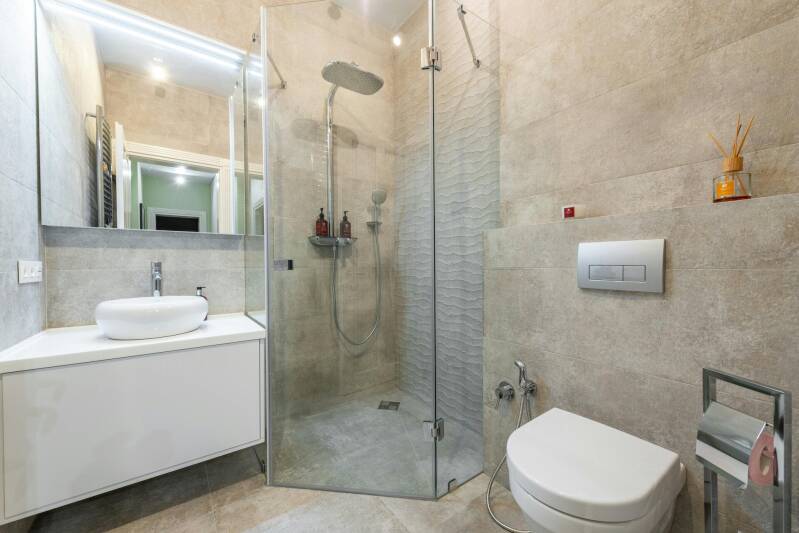
If you are experiencing problems with a shower, tap or toilet, COP Plumbing & Maintenance provides repairs and installation services as part of its plumbing services in Sheffield and South Yorkshire.
9. Check underneath sinks and cupboards
Before assuming a leak is hidden inside a wall, check the plumbing that you can actually see.
Kitchen and bathroom cupboards can conceal pipe connections, waste pipes and valves.
Open the cupboard and inspect the surrounding area for:
- Water droplets
- Damp surfaces
- Swollen cabinet panels
- Water stains
- Corrosion
- Musty smells
A small leak from an exposed connection can sometimes travel along a surface and create the appearance of a more complicated hidden leak.
Finding the problem early can make the repair considerably more straightforward.
10. Don't ignore a sudden increase in your water bill
An unexplained increase in water consumption can be another reason to investigate.
Of course, water usage changes naturally. You may use more water during certain periods because of visitors, gardening, cleaning, renovations or changes in household routines.
But if your usage increases without an obvious explanation, it is worth checking the plumbing.
A continuously running toilet, dripping tap, external leak or hidden pipe leak can all contribute to unnecessary water consumption.
If you cannot identify the source yourself, a professional plumber can help determine whether the increased usage could be related to a plumbing fault.
Where are hidden water leaks most likely to occur?
Hidden leaks can potentially occur anywhere water pipes run through a property.
Common areas worth checking include:
- Behind bathroom walls
- Behind kitchen units
- Under floors
- Inside ceilings
- Near shower installations
- Around water heaters
- Near toilets and bathroom pipework
- Around older pipe connections
Older properties can present additional challenges because pipework may have been installed using different materials and layouts over the years.
COP Plumbing & Maintenance specifically notes that it deals with issues such as leaking and burst pipes, blocked drains, boiler problems and low water pressure in its Darnall service area.
If you are based locally, you can also view the company's dedicated Darnall plumbing service page.
Can a hidden pipe leak damage your home?
Yes. The longer water continues escaping into an area that should remain dry, the greater the potential for damage.
Depending on where the leak occurs, moisture can affect plaster, plasterboard, flooring, skirting boards, cupboards and other materials.
Persistent dampness can also create an environment where mould may develop.
This is why early investigation matters.
You do not necessarily need to wait until water is visibly pouring through a ceiling before treating a suspected leak seriously.
What should you do if you suspect a hidden leak?
The first step is to establish whether you can safely identify or stop the source.
If you can see an accessible leaking connection, you may be able to isolate the water supply while arranging professional assistance.
However, avoid opening walls, removing tiles or dismantling plumbing fittings unless you know exactly what you are doing.
Attempting to reach a suspected leak without understanding the pipe layout could cause additional damage.
If water is actively escaping, locate your property's main stopcock and turn off the water supply if you can do so safely.
Where water is close to electrical equipment or sockets, take particular care and avoid creating an electrical hazard.
For significant leaks or burst pipes, professional emergency plumbing assistance may be required.
When is a hidden leak an emergency?
Not every suspected hidden leak requires an emergency call-out.
A small area of unexplained dampness that is not getting worse can usually be assessed through a scheduled appointment.
However, you should treat the situation as urgent if:
- Water is actively flowing or rapidly spreading
- A ceiling is becoming saturated
- A pipe has visibly burst
- You cannot stop the water supply
- There is significant flooding
- Water is approaching electrical equipment
- Your home is losing a substantial amount of water
COP Plumbing & Maintenance states that its emergency service is available 24 hours a day for urgent plumbing problems including burst pipes and major leaks.
You can find the company's full range of plumbing and maintenance services here.
What can a plumber do about a hidden leak?
The exact approach depends on the location and cause of the leak.
A plumber will generally begin by assessing the symptoms and examining accessible plumbing fixtures and pipework.
The aim is to establish where the water is coming from rather than simply treating the visible damage.
Once the source has been identified, the appropriate repair can be determined.
COP Plumbing & Maintenance lists both leak detection and pipe repair among its essential plumbing repair services. It also provides repairs for showers, taps, toilets, waste disposals and water heaters.
That means a suspected hidden leak can be considered as part of the wider plumbing system rather than simply the damp patch that happens to be visible.
Should you repair the wall before fixing the leak?
No. The plumbing problem should be dealt with before cosmetic repairs are carried out.
If you repaint, replaster or replace flooring while water is still entering the area, the damage can return.
The sensible order is to:
- Identify the source of the moisture.
- Stop or repair the leak.
- Allow affected materials to dry appropriately.
- Assess whether any materials have been damaged.
- Carry out necessary decorating or building repairs.
The exact drying and repair process will depend on how much water has entered the affected area and which materials have been exposed to moisture.
Can hidden leaks be prevented?
No plumbing system is completely immune to leaks, but sensible maintenance can help identify developing problems earlier.
Regularly check visible pipework, taps, toilets, shower areas and plumbing connections.
Look for corrosion, dripping connections, dampness and unusual changes in how your plumbing behaves.
It is also useful to know where your stopcock is located before an emergency happens.
COP Plumbing & Maintenance offers tailored home maintenance plans designed to help identify plumbing and essential-system problems before they develop into more serious emergencies.
You can learn more about the company's approach through its services page or About COP Plumbing & Maintenance.
What about older homes?
Older properties can sometimes require additional attention because plumbing systems may have been modified, repaired or extended over many years.
Pipework may run through areas that are difficult to access, while previous renovations can make it harder to determine exactly where particular pipes are located.
If an older property develops unexplained dampness, recurring plumbing problems or changes in water pressure, professional assessment can help establish whether the plumbing system requires repair or further maintenance.
For homeowners in Darnall, COP Plumbing & Maintenance has a dedicated local service page covering plumbing emergencies, planned services and maintenance.
The company states that it is based on Staniforth Road and serves the Darnall community as well as the surrounding Sheffield area.
How much does plumbing leak repair cost?
The cost of repairing a hidden leak depends on several factors, including the location of the leak, the accessibility of the pipe, the type of pipework involved and the extent of any damage.
It is therefore difficult to give a meaningful single price for every hidden leak.
COP Plumbing & Maintenance currently publishes its call-out and assessment pricing on its pricing and quotes page.
At the time of writing, the website lists a £35 call-out fee where a quote is not accepted, a £10 video assessment and a £150 emergency job visit, with additional emergency costs depending on the work required. The website also states that standard quotes cover labour, travel and materials, while an accepted job deducts the video assessment fee from the final quote.
Because pricing can change, it is sensible to check the current figures directly with COP Plumbing & Maintenance before booking.
Why you shouldn't simply ignore a suspected leak
A hidden leak can be easy to put out of your mind when the only symptom is a small damp patch or occasional sound.
However, if moisture is continually entering an area that should remain dry, leaving the problem unresolved does not make the underlying issue disappear.
The visible symptom may also not be directly above the actual leak. Water can travel through building materials before appearing somewhere else.
That means cutting into the most obvious damp area is not necessarily the right way to find the source.
If you cannot establish where the water is coming from, professional leak detection can be a more appropriate starting point.
Why use a local plumbing company?
When you have a plumbing problem, having access to a local company can make arranging an assessment or repair more straightforward.
COP Plumbing & Maintenance is based in Sheffield and states that it serves Sheffield and surrounding areas including Rotherham, Doncaster, Worksop and Barnsley.
The company provides both scheduled plumbing work and 24-hour emergency plumbing support.
Its services include leak detection, pipe repair, shower repair, tap repair, toilet repair, water heater repair, drain cleaning, water tank repair and various plumbing installations.
If you are looking for a local plumber, you can contact COP Plumbing & Maintenance to discuss the issue and arrange an assessment.
Final thoughts
A leaking water pipe behind a wall can be difficult to spot because the source is hidden from view. However, your home can provide several warning signs.
Damp patches, bubbling paint, peeling wallpaper, mould, musty smells, unexplained water consumption, unusual sounds and sudden changes in water pressure can all justify further investigation.
None of these signs proves by itself that a hidden pipe is leaking. There can be other explanations, including condensation, drainage problems and external water ingress.
The important thing is to avoid ignoring persistent symptoms.
If you suspect that a pipe is leaking behind a wall, start by checking accessible plumbing fixtures and connections. If the problem is not obvious, avoid unnecessary dismantling and consider arranging professional leak detection.
For a serious or rapidly developing leak, shut off the water supply if it is safe to do so and seek emergency plumbing assistance.
COP Plumbing & Maintenance provides leak detection, pipe repair, emergency plumbing and scheduled plumbing services across Sheffield and surrounding areas.
For more information, visit the COP Plumbing & Maintenance homepage, explore the full range of plumbing services, or contact the team directly to discuss your plumbing problem.
Create Your Own Website With Webador